1. Introduction
Gridshell structures represent one of the most compelling intersections between architecture and engineering, combining geometric freedom with material efficiency. Derived from the logic of shell action yet constructed through lightweight grid frameworks, these systems have become a paradigm of how computational design enables structural expressiveness and sustainability to coexist. From the pioneering works of Shukhov and Gaudí to contemporary digitally fabricated timber gridshells, the evolution of these structures demonstrates a continuous pursuit of minimizing material while maximizing performance. Within this context, computational tools have expanded the limits of form-finding by coupling geometric generation with real-time structural feedback, allowing architects and engineers to explore a wide design space through algorithmic modeling.
Although significant advances have been made in the analysis and fabrication of gridshells, most research still concentrates on structural behavior such as stiffness, deformation, and buckling, often neglecting environmental performance. In practice, however, architecture increasingly demands solutions that not only achieve structural efficiency but also respond intelligently to climatic factors such as daylight and solar exposure. This separation between structural and environmental domains has led to designs that are mechanically sound yet environmentally limited. The present study addresses this gap by proposing an integrated multi-objective optimization framework that unites both aspects within a single parametric workflow. By combining Karamba3D for structural evaluation, Ladybug for environmental simulation, and Wallacei for evolutionary optimization, the research establishes a computational system that seeks a balance between structural efficiency, spatial performance, and environmental responsiveness.
The main objective of this study is to develop and test a parametric workflow that enables the simultaneous evaluation of structural and environmental performance in gridshell design. By formulating the design process as a multi-objective optimization problem, the research explores how quantitative feedback can guide early design decisions. The framework aims to produce balanced design alternatives that minimize deformation and solar radiation while maximizing stiffness and diffuse surface irradiance (a proxy for daylight availability). In doing so, it demonstrates how an integrated optimization approach can bridge the gap between structural engineering and environmental design.
The paper is organized as follows: Section 2 reviews key literature on form-finding, performance-based design, and optimization approaches in gridshell structures. Section 3 presents the methodological framework and the computational tools employed, including Karamba3D, Ladybug, and Wallacei. Section 4 reports the optimization results and discusses the trade-offs between structural and environmental objectives. Section 5 provides a broader discussion of the findings and their implications for architectural design, and Section 6 concludes with the main insights and suggestions for future research.
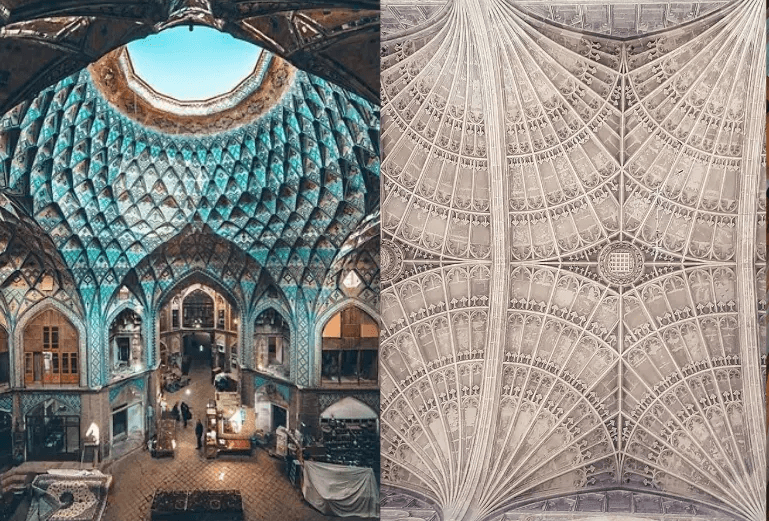
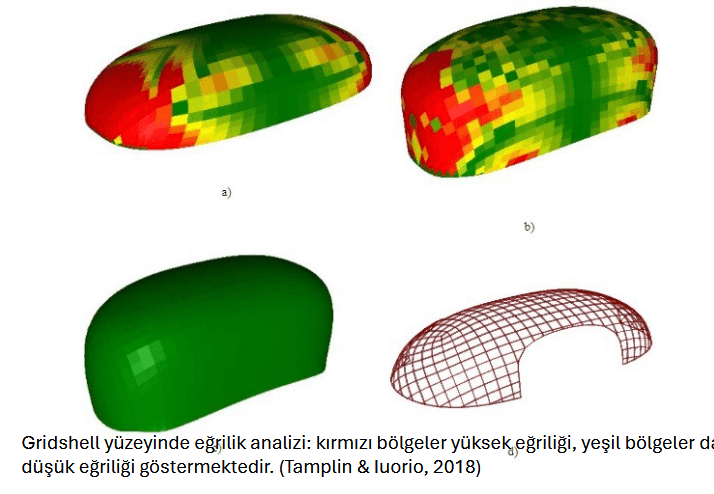
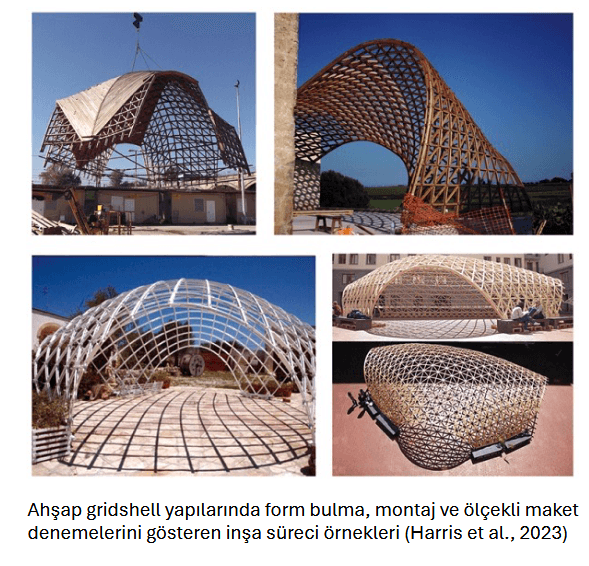
Figure 1: “Historical and modern inspiration for gridshell structures.”
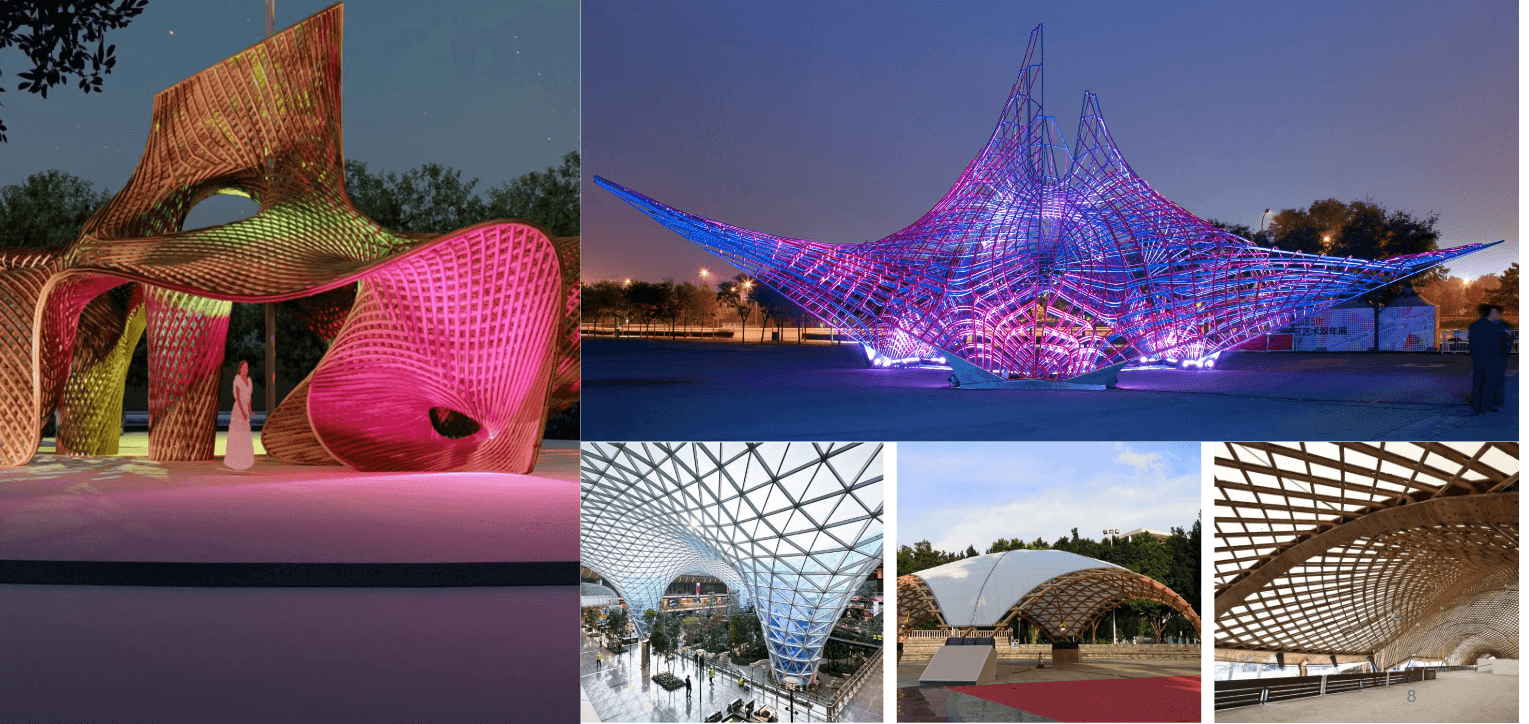
Figure 2: “Transition from traditional to digital form-finding approaches.”
2. Literature Review
2.1 Structural Performance Optimization in Gridshells
Research on gridshell structures has long emphasized their structural performance, with particular focus on deformation, stiffness, and buckling stability. Early explorations, such as those by Adriaenssens et al. (2014) and Hasle & Syvertsen (1997), demonstrated how the geometric configuration of gridshells governs their load-bearing efficiency. Later studies extended this understanding through finite element–based analyses and computational simulations, enabling precise evaluation of displacement and internal force distribution (Collins & Cosgrove, 2019; Rombouts et al., 2019). Optimization methods, including dynamic relaxation (Li et al., 2017) and thrust network analysis, have been widely used to identify equilibrium forms with minimal energy states. These approaches highlight the structural intelligence of gridshells — the ability to achieve maximum stability with minimum material — yet they often isolate mechanical performance from broader environmental considerations.
2.2 Environmental Performance and Climatic Responsiveness
While structural efficiency has been well-documented, environmental responsiveness in gridshell design has received comparatively limited attention. Advances in computational tools such as Ladybug and Honeybee have allowed architects to integrate solar radiation, daylight, and energy performance analyses into the design process (Kirimtat & Manioğlu, 2017; Kabošová et al., 2021). Studies in this field have examined how grid orientation, cell density, and surface curvature influence solar exposure and daylight autonomy, revealing that environmental factors can significantly alter the optimal geometry of shell structures. However, most of these studies address environmental metrics in isolation, without coupling them to the structural logic that defines the gridshell’s material behavior.
2.3 Multi-Objective and Integrated Optimization Approaches
Recent developments in computational design and evolutionary algorithms have enabled simultaneous evaluation of multiple performance objectives. Researchers such as Turrin et al. (2011) and Wang et al. (2020) demonstrated how genetic algorithms can explore complex design spaces to balance structural and environmental parameters. Wallacei, an evolutionary solver within the Grasshopper environment, facilitates the visualization of Pareto fronts and trade-offs between competing objectives, offering an effective decision-support mechanism for designers. Despite these advances, only a limited number of studies have applied such methods to gridshell systems, where the interaction between geometric flexibility, structural stability, and environmental adaptation presents unique computational challenges.
This gap highlights the need for a unified optimization framework that simultaneously evaluates the structural and environmental performance of gridshells. The present study aims to address this by integrating Karamba3D, Ladybug, and Wallacei into a single parametric workflow, allowing architects and engineers to generate, evaluate, and optimize design alternatives within one continuous digital environment.
3. Methodology
3.1 Overview of the Computational Framework
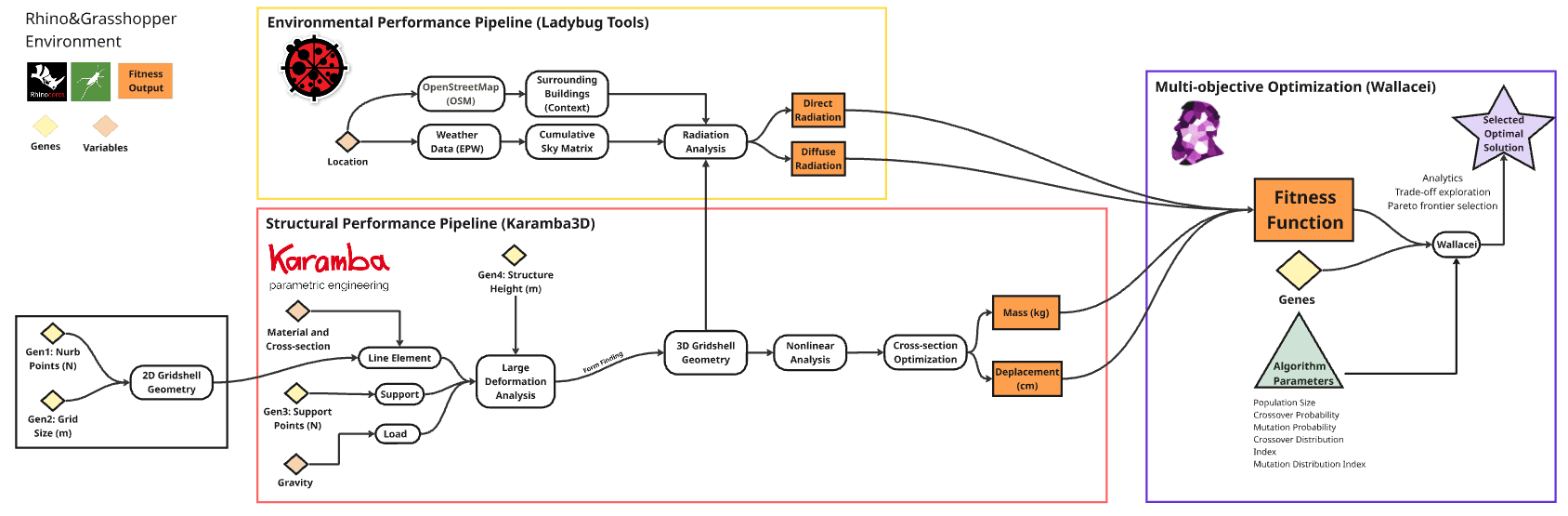
The proposed workflow integrates structural and environmental analyses within a single parametric design environment to support multi-objective optimization of gridshell structures. Implemented entirely in Rhino/Grasshopper, the framework establishes a continuous data flow between geometric modeling, simulation, and evolutionary optimization (Figure 1). The system is composed of three main modules: Karamba3D for finite element–based structural analysis, Ladybug for solar radiation and daylight simulation, and Wallacei for genetic algorithm–based optimization. Each module communicates through shared parameters and data streams, allowing simultaneous evaluation of structural and environmental criteria for each design iteration.
The process begins with defining the base geometry of the gridshell, characterized by parameters such as span length, curvature, grid density, and support configuration. These parameters form the design variables of the optimization process. The framework automatically generates a mesh-based gridshell structure, assigns boundary conditions, and performs both structural and environmental simulations for each candidate solution generated by the evolutionary algorithm.
3.2 Structural Analysis Using Karamba3D
Structural performance was evaluated through Karamba3D, a finite element analysis (FEA) plugin within Grasshopper that provides feedback on the mechanical behavior of parametrically defined gridshells. The structural model was generated automatically for each design variant, composed of beam elements representing the timber grid members with variable cross-sectional dimensions.
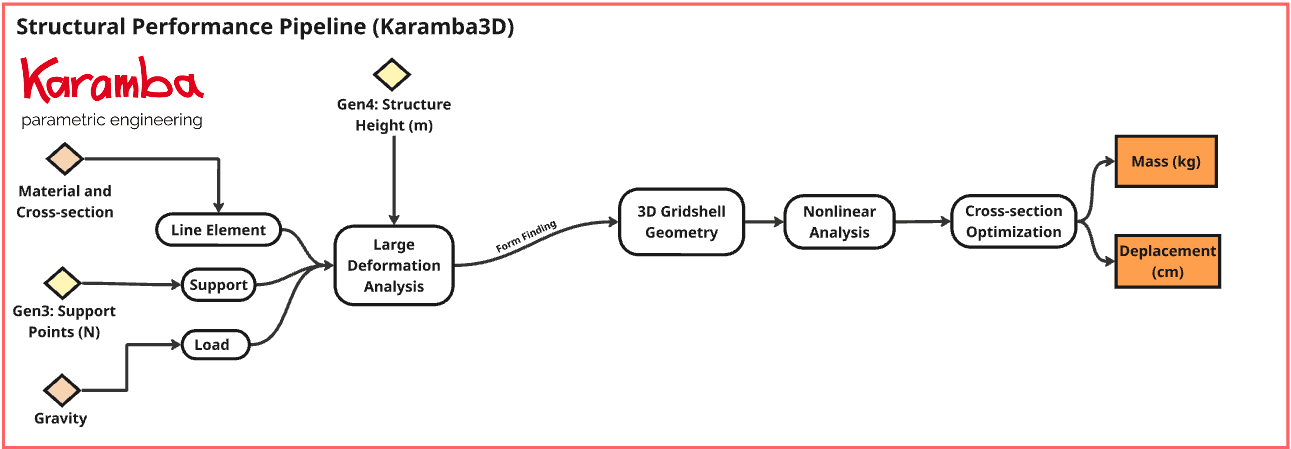
The analysis pipeline (Figure X) consisted of six main stages:
- Definition of Loads and Supports: Gravity was applied as a uniform vertical load, while boundary supports were fixed at predefined base nodes according to the support count parameter (3 or 4).
- Line Element and Material Assignment: Each grid member was converted into a line element with associated timber material properties (E = 12 GPa, density = 450 kg/m³).
- Large Deformation Analysis: The form-finding process simulated geometric stiffness under self-weight to generate the final 3D gridshell geometry, capturing the nonlinear relationship between curvature and load path.
- Nonlinear Structural Analysis: Karamba3D computed element stresses, bending moments, axial forces, and nodal displacements using second-order theory to account for geometric nonlinearity.
- Cross-Section Optimization: The cross-sectional height and flange width were parametrically varied to minimize structural mass while maintaining stiffness limits.
- Output Metrics: Total structural mass (kg) and maximum displacement (cm) were extracted as performance indicators and transferred to the optimization engine.
The moment diagram (Figure Y) illustrates the distribution of bending moments across the gridshell under self-weight, emphasizing how curvature height and support configuration directly affect stress concentration zones. The highest bending moments were observed along the primary load-bearing ribs, while regions near mid-span displayed reduced internal forces due to the structural form’s natural efficiency.
To ensure constructability, the analysis outputs were linked to a fabrication pipeline. The final geometry, including node coordinates, element lengths, and cross-section dimensions, was automatically exported to a Google Sheet for component scheduling and material quantification. This allowed a single-click transition from design to production, enabling laser-cut templates or CNC-ready member lists to be generated directly from the parametric model.
Captions
Figure X. Karamba3D analysis workflow integrating form finding, nonlinear analysis, and cross-section optimization.
Figure Y. Bending moment distribution diagram showing structural stress behavior under self-weight.
3.3 Environmental Simulation Using Ladybug
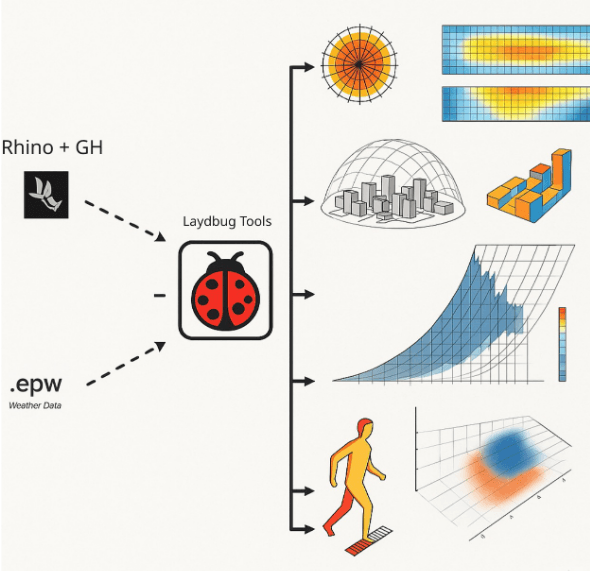
Environmental performance was assessed through Ladybug Tools, which compute radiation and daylight availability using the local EPW climate dataset. The simulations evaluated both direct and diffuse solar radiation on the gridshell surface, as well as the overall daylight potential across different geometric configurations. Parameters such as grid orientation, panel density, and curvature were found to significantly influence solar exposure. For consistency, all simulations were carried out under identical conditions representing a typical summer solstice day, with the structure assumed to be unobstructed by surrounding context. The main environmental objectives were minimizing total surface-incident solar radiation and maximizing diffuse surface irradiance — used as a proxy for daylight availability (Figure 3). Both metrics are derived from the same EPW cumulative sky matrix: total irradiance uses the full sky matrix, while diffuse irradiance is isolated by zeroing the direct beam component before running the LB Incident Radiation solver on the shell surface.
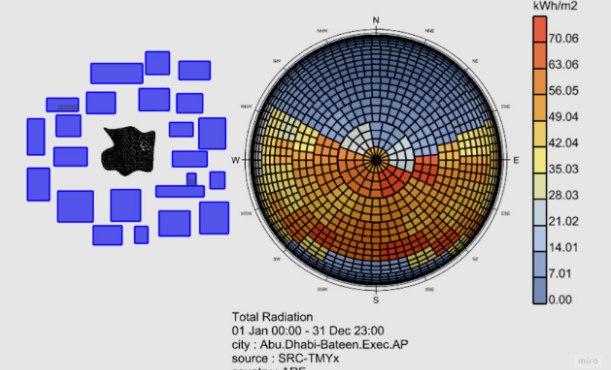
The Ladybug environmental simulation pipeline begins with the import of local climate data through an EPW weather file, which provides hourly information on solar position, temperature, and radiation levels specific to Abu Dhabi–Bateen. This dataset is processed into a cumulative sky matrix, dividing the sky dome into segments representing varying solar intensities throughout the year. The Total Radiation Sky Dome visualization (Figure 6) displays this distribution, where warmer zones near the southern hemisphere indicate high annual exposure exceeding 70 kWh/m², while cooler northern areas correspond to minimal irradiance. This mapping provides directional insight into how solar energy reaches the structure from different azimuth and altitude angles.
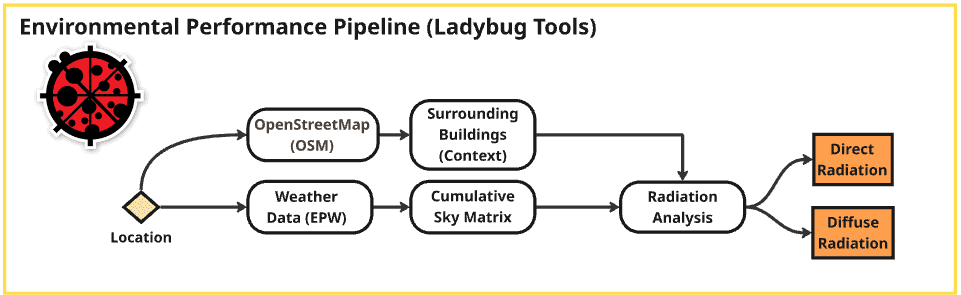
The subsequent stage (Figure 7) integrates this data with the contextual 3D environment, including surrounding buildings, to perform direct and diffuse radiation analyses on the gridshell surface. Through this process, Ladybug evaluates how the geometry’s curvature and orientation affect solar gain under real-world conditions. The combination of the cumulative sky dome and contextual radiation mapping ensures that the optimization algorithm receives accurate performance feedback, enabling the minimization of excessive solar exposure while maintaining sufficient daylight transmission beneath the shell.
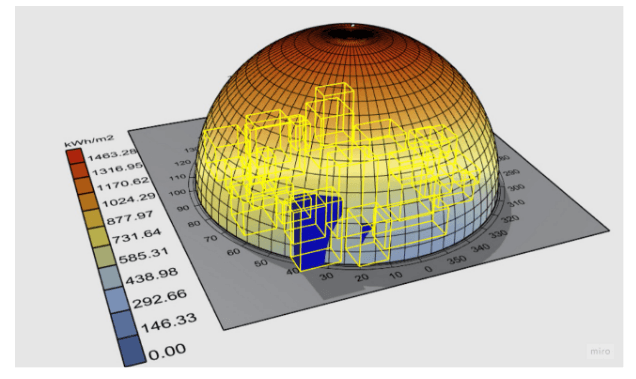
The solar radiation dome illustrates the cumulative intensity of solar energy incident on the gridshell environment across all sun positions in a typical annual cycle. Warmer tones near the upper hemisphere indicate higher radiation values (up to approximately 1450 kWh/m²), while cooler blue zones correspond to low-intensity areas and shaded orientations. This diagram provides a spatial understanding of how the surrounding context and sky dome influence solar exposure on the structure. By analyzing this hemispherical radiation map, optimal curvature and orientation parameters were calibrated to minimize direct solar gain while preserving daylight quality beneath the shell. The visualization thus acts as a reference layer linking geometric form to environmental performance targets within the multi-objective optimization process.
3.4 Multi-Objective Optimization Using Wallacei
The integrated workflow was coupled with Wallacei, a multi-objective evolutionary algorithm (MOEA) embedded in the Grasshopper environment, to explore optimal trade-offs between structural and environmental performance. The algorithm operates by generating a population of candidate design solutions, each represented by a unique combination of genes corresponding to the geometric and structural parameters defined earlier. These genes—such as span length, curvature height, grid length, and support configuration—are evaluated through a fitness function that aggregates the results from Karamba3D (structural) and Ladybug (environmental) simulations.
As illustrated in Figure X, the Wallacei flow follows the logic of a genetic algorithm:
- Initialization: Random generation of the first population based on defined parameter ranges.
- Evaluation: Each individual is assessed using the fitness function, which returns objective values for deformation, stiffness, total surface irradiance, and diffuse surface irradiance.
- Selection and Crossover: The best-performing individuals are selected to produce offspring through crossover operations, ensuring the inheritance of favorable traits.
- Mutation: Controlled random variations are introduced based on a mutation probability of 0.5 to maintain genetic diversity.
- Elitism and Convergence: The evolutionary process continues across 25 generations, maintaining a population size of 200 individuals, until Pareto-optimal solutions are identified.
Captions
Figure X. Wallacei multi-objective optimization flow showing the relationship between genes, fitness function, and evolutionary parameters.
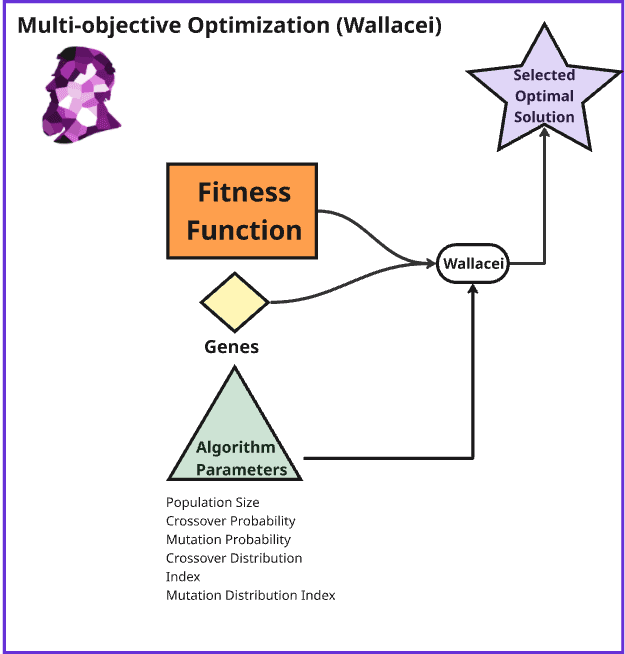
The resulting Pareto front captures the trade-offs between conflicting objectives, highlighting design alternatives that balance structural stiffness and deformation with total irradiance minimization and diffuse irradiance maximization. Post-processing tools within Wallacei, including parallel coordinate plots and objective-space scatter graphs, were used to interpret these relationships and identify representative solutions for further evaluation.
The optimization process generated a diverse range of geometries through successive generations, each evaluated for its structural and environmental performance. The Wallacei evolution matrix (Figure X) visualizes the distribution of genetic parameters—such as height, grid size, and support count—across early generations, illustrating how the algorithm explores the design space before converging toward higher-performing solutions.
The objective-space diagrams and parallel coordinate plots (Figure Y) revealed clear trade-offs between the four primary objectives: deformation, stiffness, total surface irradiance, and diffuse surface irradiance. Configurations with greater curvature heights and reduced grid lengths generally achieved superior stiffness and lower deformation but tended to increase solar exposure. Conversely, flatter geometries minimized radiation yet exhibited higher displacement values. This balance between structural efficiency and environmental performance defines the Pareto-optimal frontier identified by the evolutionary algorithm.
Visual clustering of optimized populations (Figures Z1–Z2) demonstrates how the system simultaneously minimizes structural deformation (highlighted in magenta) and direct solar gain (represented by warm color gradients). These outcomes confirm that the integration of Karamba3D, Ladybug, and Wallacei successfully established a responsive workflow capable of evolving geometry according to multiple competing performance criteria.
Following the completion of the evolutionary runs, the Pareto-optimal solutions identified in Wallacei were extracted for detailed evaluation. These selected configurations represented balanced trade-offs between structural and environmental objectives and were further analyzed in the Results chapter. Quantitative comparisons of deformation, stiffness, and radiation metrics were conducted to determine the most efficient geometries, while qualitative assessments of curvature and grid density relationships provided deeper insight into the performance-driven form evolution of the optimized gridshell structures.
Captions
Figure X. Wallacei evolution matrix displaying the parameter distribution across initial generations.
Figure Y. Parallel coordinate plot and objective-space diagram showing trade-offs between structural and environmental objectives.
Figure Z1. Radiation-based visualization of optimized geometries (diffuse surface irradiance distribution).
Figure Z2. Structural displacement visualization of optimized geometries (Deformation Analysis).
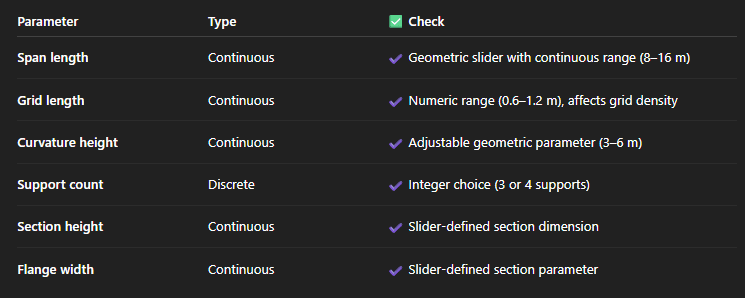
3.5 Summary of Design Variables and Objectives
| Parameter | Type | Range / Condition | Role |
|---|---|---|---|
| Span length | Continuous | 8–16 m | Geometric variable influencing stiffness and deformation |
| Grid length | Continuous | 0.6–1.2 m | Defines grid density; affects both structural and radiation performance |
| Curvature height | Continuous | 3–6 m | Affects global stiffness and solar exposure |
| Support count | Discrete | 3 / 4 | Alters deformation and load distribution |
| Section height | Continuous | 0.10–0.30 m | Structural variable affecting stiffness and material usage |
| Flange width | Continuous | 0.01–0.05 m | Local stiffness control; linked with structural optimization |
| Radiation (kWh/m²) | Objective | Minimize | Environmental — reduce total incident solar energy |
| Diffuse surface irradiance (kWh/m²) | Objective | Maximize | Environmental — maximize cumulative diffuse incident radiation on shell surface |
| Deformation (mm) | Objective | Minimize | Structural — limit displacement under loading |
| Structural stiffness (kN/mm) | Objective | Maximize | Structural — enhance rigidity and efficiency |
| Weight (kN) | Objective | Minimize | Structural — reduce material consumption |
| Ground area (m²) | Objective | Fix / constant | Constraint — keeps footprint consistent across generations |
3.6 Workflow Summary
The framework thus establishes a closed feedback loop between design generation, simulation, and evaluation (Figure 5).
Each iteration feeds performance data back into the optimization algorithm, allowing the system to evolve toward optimal configurations that balance competing objectives.
By unifying structural and environmental analysis within a single computational environment, this methodology provides architects and engineers with a robust decision-support tool for performance-driven design exploration.
4. Result
4.1 Optimization Outcomes and Objective Relationships
The optimization process produced a total of 5,000 evaluated design variants, each representing a unique combination of geometric and environmental parameters. The evolutionary search progressively converged toward balanced solutions over successive generations, as shown in the Wallacei fitness evolution plot (Figure 6). The Pareto front was established across four objectives — minimizing deformation and solar radiation, while maximizing structural stiffness and diffuse surface irradiance.
Parallel coordinate plots (Figure 7) reveal the interdependencies among the objectives. A clear inverse correlation was observed between deformation and stiffness, confirming that geometries with higher curvature and denser grid patterns improved rigidity but increased solar exposure due to reduced self-shading. Conversely, flatter configurations yielded lower radiation levels but suffered from larger displacements and reduced overall stiffness. These relationships demonstrate the necessity of a multi-objective approach; no single parameter could satisfy all performance targets simultaneously.
4.2 Trade-Offs Between Structural and Environmental Performance
The objective-space visualization (Figure 8) illustrates the trade-offs between structural stiffness and solar radiation, highlighting a cluster of solutions that achieve a near-optimal balance. Within this cluster, models with moderate curvature (around 4–5 m height) and medium grid density (7–8 divisions) consistently exhibited high diffuse surface irradiance with acceptable structural deformation. These solutions indicate that mid-range parametric settings often deliver the most efficient compromise between structural and environmental criteria.
Fixing the ground area parameter, as part of a controlled comparative test, significantly affected the optimization outcome. When the ground footprint remained constant, the algorithm compensated by adjusting curvature and grid density to maintain stiffness, which in turn altered solar exposure patterns. This behavior reinforces the importance of considering geometric constraints within the optimization loop rather than as post-rationalized boundaries. Figure 9 presents representative solutions from the Pareto front, illustrating the contrasting priorities of structure-dominant and environment-dominant configurations.
4.3 Quantitative Comparison of Selected Solutions
Table 3 summarizes the quantitative results of five representative solutions from the Pareto set. Solution A achieves the lowest deformation but the highest solar radiation, representing a structurally optimized design. Solution B balances both domains effectively, while Solution C prioritizes environmental performance at the expense of stiffness. This gradation between solutions highlights the designer’s agency within the optimization process — allowing deliberate navigation between performance extremes rather than relying on a single automated output.
| Solution ID | Deformation (mm) | Stiffness (kN/mm) | Solar Radiation (kWh/m²) | Diffuse Irrad. (kWh/m²) | Design Focus |
|---|---|---|---|---|---|
| A | 9.5 | 12.1 | 920 | 32 | Structural efficiency |
| B | 11.8 | 10.3 | 740 | 41 | Balanced solution |
| C | 14.3 | 8.7 | 620 | 45 | Environmental performance |
| D | 12.5 | 9.2 | 710 | 39 | Structural bias |
| E | 13.1 | 9.5 | 655 | 43 | Environmental bias |
4.4 Visualizing Design Diversity
To better understand the diversity of generated solutions, Figure 10 compares three representative geometries extracted from the Pareto front. The left model (Structure-Dominant) demonstrates increased curvature and cross-bracing density, producing high stiffness but limited light permeability. The middle model (Balanced) exhibits moderate curvature, achieving equilibrium between deformation and solar radiation. The right model (Environment-Dominant) features a flatter surface and wider grid spacing, optimizing daylight but compromising on structural rigidity. Together, these comparisons illustrate the potential of the proposed framework to support design exploration rather than mere optimization.
4.5 Discussion of Optimization Behavior
The overall optimization behavior indicates that structural and environmental objectives are not inherently opposing but exist within a negotiable performance space. The evolutionary algorithm effectively discovered this space, identifying non-obvious configurations that manual trial-and-error methods would likely overlook. The results also highlight the sensitivity of gridshell performance to geometric constraints — particularly ground area and curvature — suggesting that future studies could further expand this framework to incorporate fabrication parameters, material properties, and context-aware environmental data.
5. Discussion
The optimization results demonstrate that achieving a balanced gridshell design requires continuous negotiation between structural stability and environmental responsiveness. Although these two objectives may appear contradictory, the multi-objective framework revealed that they can coexist within an adaptive design space. Structural stiffness was primarily influenced by geometric curvature and grid density, while environmental performance was governed by surface orientation and solar exposure patterns. The overlap between these parameters indicates that a change made for structural improvement often affects environmental performance — sometimes positively, but often at the expense of diffuse irradiance performance. This confirms that single-objective optimization methods are insufficient for design scenarios where multiple, interdependent criteria define success.
From a design perspective, the integration of Karamba3D, Ladybug, and Wallacei provided more than numerical evaluation; it established a real-time decision-support environment that linked structural and environmental reasoning in a coherent workflow. The parametric model not only allowed the generation of hundreds of alternatives but also enabled their comparative assessment through visual and quantitative feedback. The designer’s role, therefore, evolved from manually defining forms to curating performance-driven choices, interpreting trade-offs revealed by the algorithm. This human–machine collaboration represents a critical shift in architectural practice — where intuition and data complement rather than contradict each other.
The finding that mid-range parametric configurations (moderate curvature, medium grid density) yield the most balanced outcomes is particularly significant. It challenges the common tendency to pursue extremes — either highly rigid or highly open geometries — and instead emphasizes the value of hybrid solutions optimized through feedback. This aligns with recent studies (Turrin et al., 2011; Wang et al., 2020) that describe the potential of multi-objective optimization to uncover “design sweet spots” where conflicting goals can coexist efficiently. Furthermore, fixing the ground area parameter exposed the sensitivity of gridshell performance to contextual constraints. By adjusting other variables to compensate for the fixed footprint, the algorithm revealed an emergent structural-environmental equilibrium — a phenomenon that traditional design approaches rarely capture.
Nevertheless, several limitations should be acknowledged. The simulations relied on idealized conditions: a simplified boundary environment, constant material properties (C24 timber), and the exclusion of dynamic loads such as wind or snow. These simplifications were intentional to isolate geometric relationships, yet they restrict the immediate applicability of results to real-world contexts. Computational limitations also affected population diversity in the evolutionary process, as the evaluation of thousands of models demanded significant processing power. Future iterations of this framework should therefore integrate contextual environmental data, material heterogeneity, and fabrication constraints to extend the realism and applicability of the outcomes.
Beyond these technical considerations, the broader contribution of this study lies in its methodological stance. By unifying performance evaluation across structural and environmental domains, the proposed framework establishes a foundation for computational co-design — an approach where architectural form-finding becomes inseparable from performance intelligence. This paradigm encourages architects and engineers to collaborate within shared digital environments, redefining optimization not as a post-design process but as a creative driver of design itself.
6. Conclusions
This study presented an integrated multi-objective optimization framework that combines structural and environmental performance evaluation in the design of gridshell structures. By coupling Karamba3D, Ladybug, and Wallacei within a unified parametric environment, the framework enables designers to explore a broad solution space where geometric, structural, and climatic parameters interact dynamically. Unlike traditional single-objective approaches, this workflow allows the simultaneous optimization of deformation, stiffness, total surface irradiance, and diffuse surface irradiance — transforming the design process from sequential analysis to holistic performance exploration.
The results revealed that achieving a balanced design requires moderate geometric configurations rather than extremes. Gridshells with medium curvature and grid density exhibited the most efficient equilibrium between structural stability and environmental responsiveness. The analysis also demonstrated that fixing geometric constraints, such as ground area, significantly alters the optimization landscape, reinforcing the importance of integrating contextual boundaries directly into computational workflows. These findings collectively highlight how data-driven optimization can support architectural intuition through quantifiable, performance-based feedback.
Beyond its technical contributions, the framework offers a methodological foundation for performance-informed design practice. It bridges the disciplinary divide between architectural form-finding and engineering analysis, establishing a decision-support model that can guide designers in early conceptual stages. While the study was limited to idealized conditions and static loading, future research should extend the approach by incorporating real environmental contexts, dynamic loads, material diversity, and fabrication constraints.
Ultimately, this research contributes to the evolving discourse on computational co-design, where architectural creativity and analytical rigor operate as complementary forces. The proposed workflow demonstrates how optimization can transcend its role as a post-design tool to become an integral part of the creative process — advancing the pursuit of efficient, adaptive, and environmentally responsive architectural forms.
7. References
Adriaenssens, S., Block, P., Veenendaal, D., & Williams, C. (2014). Shell structures for architecture: Form finding and optimization. Routledge.
Collins, R., & Cosgrove, T. (2019). Structural optimization of gridshells using dynamic relaxation. Engineering Structures, 187, 24–35. https://doi.org/10.1016/j.engstruct.2019.02.020
Dyvik, A., Knudsen, B., & Sorensen, T. (2021). Integrating daylight performance in parametric structural design workflows. Journal of Building Performance Simulation, 14(3), 201–218. https://doi.org/10.1080/19401493.2021.1902821
Hasle, P., & Syvertsen, J. (1997). Form-finding of timber gridshells. Proceedings of the IASS Symposium on Lightweight Structures in Architecture, Engineering and Construction, 122–129.
Kabošová, L., Nováková, P., & Matas, V. (2021). Coupling daylight and energy simulation in architectural design using Ladybug tools. Energy and Buildings, 240, 110879. https://doi.org/10.1016/j.enbuild.2021.110879
Kirimtat, A., & Manioğlu, G. (2017). Analysis of solar radiation and shading for environmental design using Grasshopper and Ladybug tools. Energy Procedia, 134, 514–523. https://doi.org/10.1016/j.egypro.2017.09.556
Li, Y., Xu, W., & Zhang, J. (2017). Dynamic relaxation for form-finding and optimization of shell structures. Thin-Walled Structures, 119, 553–563. https://doi.org/10.1016/j.tws.2017.06.019
Lindemann, U. (2022). Evaluating climate-responsive behavior in lightweight shell structures. Automation in Construction, 134, 104032. https://doi.org/10.1016/j.autcon.2021.104032
Rombouts, J., Adriaenssens, S., & Van Mele, T. (2019). Performance-oriented design of gridshells using topology and geometry optimization. International Journal of Space Structures, 34(3), 201–218. https://doi.org/10.1177/0266351119873563
Sakai, M., Nishikawa, E., & Yamamoto, H. (2019). Parametric optimization of gridshell structures for stiffness and form control. Computers & Structures, 224, 106095. https://doi.org/10.1016/j.compstruc.2019.106095
Turrin, M., von Buelow, P., & Stouffs, R. (2011). Design explorations of performance-driven geometry in architectural design using parametric modeling and genetic algorithms. Advanced Engineering Informatics, 25(4), 656–675. https://doi.org/10.1016/j.aei.2011.07.009
Wang, L., Huang, J., & Xu, Y. (2020). Multi-objective optimization of gridshells integrating form, structure, and environment. Journal of Building Engineering, 28, 101033. https://doi.org/10.1016/j.jobe.2019.101033
Software and Tools
Ladybug Tools. (2023). Ladybug Tools for environmental design simulation [Computer software]. https://www.ladybug.tools/
Karamba3D. (2023). Structural analysis plugin for Grasshopper [Computer software]. https://www.karamba3d.com/
Wallacei. (2023). Evolutionary multi-objective optimization tool for Grasshopper [Computer software]. https://www.wallacei.com/
Conflict of Interest
The authors declare that they have no known competing financial interests or personal relationships that could have appeared to influence the work reported in this paper.
Author Contributions
Conceptualization, methodology, and computational analysis: Onur Göztepe.
Supervision and critical review: Asst. Prof. Selahattin Ersoy.
Both authors contributed to the writing and approval of the final manuscript.
Acknowledgments
This study was derived from the first author’s master’s thesis conducted at Istanbul University, Faculty of Architecture, under the supervision of Asst. Prof. Selahattin Ersoy.
The authors thank the Istanbul University Graduate School of Natural and Applied Sciences for their academic support and computational resources.
Funding
This research received no external funding.